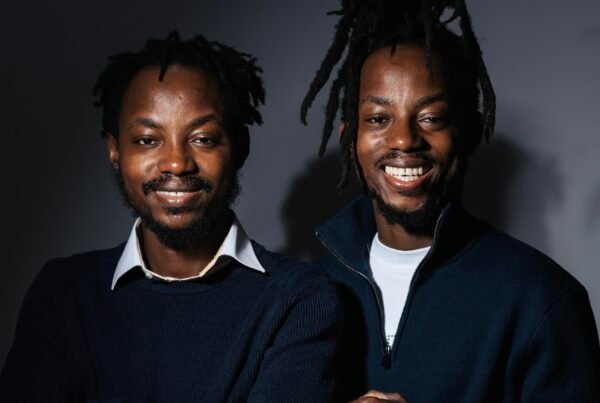

Epixode has received international academic recognition at Rutgers University in the United States, where his musical journey and evolving artistic identity featured prominently in a thought-provoking presentation examining the historic and contemporary connections between African and Caribbean music. Click Here
The presentation formed part of a guest lecture titled “Music as the Bridge: Nketia Archives and Atlantic Rhythms,”delivered on November 23, 2026, by Ghanaian archivist Mr. George Gyesaw of the Professor J.H. Kwabena Nketia Archives at the Institute of African Studies in Ghana.
Gyesaw delivered the lecture at the invitation of Rutgers University professors Hyacinth Miller and Bright Gyamfi, bringing Ghana’s rich musical heritage into an international academic conversation. The engagement also sets the stage for a continuation of the cultural exchange, with Professors Miller and Gyamfi expected to bring students to Ghana to further explore the relationship between African and Caribbean musical traditions.
At the centre of the presentation was Epixode, whose artistic development provides an interesting contemporary example of how musical influences from across the Atlantic can inspire cultural rediscovery, creative experimentation and a deeper appreciation of one’s heritage.
Epixode has established himself as one of Ghana’s recognizable voices in Reggae and Dancehall, two genres deeply rooted in Jamaica’s cultural history and which have found a significant following across Africa.

Through his distinctive vocal delivery, understanding of rhythms commanding stage presence and contemporary Dancehall influences, he has built an artistic identity that reflects the energy and expressive traditions of Caribbean music.
However, beyond the infectious rhythms and energetic performances that have characterised his career, the musician is increasingly exploring another important dimension of his artistic identity: Ghanaian Highlife.
His growing interest in Highlife, particularly its live-band traditions, melodic arrangements, instrumentation and storytelling, represents more than an attempt to experiment with a different genre. It reflects a conscious engagement with his cultural roots and a desire to incorporate elements of Ghana’s musical heritage into the sound and artistic philosophy that define him.
This evolution also offers an interesting perspective on the historical relationship between Africa and the Caribbean, where music has consistently served as a vehicle for identity, resistance, freedom, cultural consciousness and reconnection.
The philosophies associated with influential Pan-African figures such as Kwame Nkrumah and Marcus Garvey provide an important historical backdrop to these connections, highlighting the enduring cultural bonds between African communities and their descendants across the Atlantic.
One of the clearest demonstrations of Epixode’s musical versatility is his recording ‘Atia’, a project that highlights his ability to navigate different musical expressions while maintaining his artistic identity.
The original recording earned him significant recognition, winning the Best Reggae/Dancehall Song category at the 2023 Ghana Music Awards.
Its subsequent Highlife interpretation, featuring celebrated Ghanaian musician Kwabena Kwabena, further expanded the song’s creative possibilities.
Produced by GomezBeatx, the Highlife rendition brings together two distinct artistic identities, combining Epixode’s Caribbean-influenced musical foundation with the familiar melodic sensibilities and live-band character associated with Ghanaian Highlife.
The collaboration, included in the wider Atia Archive project, offers a meaningful celebration of Ghanaian musical heritage while demonstrating how established sounds can be reinterpreted for contemporary audiences.
More importantly, it reinforces the idea that traditional Ghanaian music should not simply be preserved as a collection of historical recordings. It remains a living cultural expression capable of inspiring fresh compositions, collaborations and new generations of musicians.
For Epixode, the exploration of Highlife does not represent a rejection of Reggae and Dancehall. Rather, it signals an expansion of his musical vocabulary and an opportunity to tell stories that connect his international influences with his Ghanaian identity.
While his exploration of musical heritage demonstrates his creative versatility, Epixode has also shown a commitment to using his platform to address issues affecting society.
A notable example is his socially conscious recording ‘Chooboi’, which tackles the environmental destruction and community challenges associated with illegal small-scale mining, popularly known in Ghana as galamsey.
The song reflects the musician’s willingness to move beyond conventional entertainment and use music as a platform for public awareness and social commentary.
Produced by GomezBeatx, ‘Chooboi’ earned Epixode the Music for Good Award at the 2025 Telecel Ghana Music Awards, recognising the socially conscious message behind the recording.
Interestingly, both ‘Atia’ and ‘Chooboi’ were submitted for 2025 Grammy consideration, according to information contained in the artist’s supplied electronic press kit. This refers to consideration and should not be interpreted as an official Grammy nomination or win.
Together, the two recordings reveal different but complementary aspects of Epixode’s artistry. While ‘Atia’ celebrates musical heritage, cultural exchange and artistic reinvention, ‘Chooboi’ demonstrates how music can contribute to conversations about environmental responsibility and national development.
The significance of Gyesaw’s presentation at Rutgers University extends beyond the recognition of an individual Ghanaian musician.
As an archivist at the Professor J.H. Kwabena Nketia Archives, his work explores the historical relationships between African and Caribbean musical traditions, tracing cultural influences and exchanges across genres such as Calypso, Cuban Son, Haitian drumming, Jamaican Reggae and Ghanaian popular music.
By bringing Epixode’s artistic evolution into this discussion, Gyesaw demonstrated how historical musical connections continue to find expression in the work of contemporary African musicians.
The presentation also offered an opportunity to examine how music has travelled across geographical boundaries, transformed through cultural encounters and influenced generations of artists.
In this context, Epixode’s movement between Reggae, Dancehall and Highlife becomes more than an individual creative decision. It reflects a broader cultural conversation about the relationship between African musical foundations and the sounds that emerged and developed throughout the Caribbean.
The discussion further emphasised the importance of preserving historical musical knowledge while ensuring that it remains accessible and relevant to contemporary creative practice.
One particularly interesting idea emerging from the conversation was the possibility of establishing an Artist-in-Residence initiative at the Nketia Archives.
The proposed initiative could create opportunities for contemporary musicians to engage directly with historical recordings, study archival materials, interact with traditional musical knowledge and reinterpret Ghana’s musical heritage through new compositions.
Imagine emerging Ghanaian musicians gaining access to recordings of legendary Highlife performances, traditional Ghanaian compositions and historical Caribbean music, then drawing inspiration from these materials to create sounds that speak to present-day audiences.
Such an initiative could provide a valuable creative environment for artists like Epixode, whose musical foundation already reflects the influence of Caribbean traditions but whose evolving artistic direction increasingly embraces Ghanaian musical heritage.
It could also help bridge the generational gap between archival scholarship, traditional musicians and contemporary performers.
Rather than allowing historical recordings to remain confined to archives and academic research, the initiative would encourage musicians to transform preserved knowledge into new creative expressions.
This approach could strengthen Ghana’s music industry by creating a closer relationship between cultural preservation, music education, artistic experimentation and international collaboration.
Another interesting dimension of Epixode’s artistic identity is his multidisciplinary approach to creativity.
According to his electronic press kit, the musician’s creative interests extend beyond music into fine art, painting, graffiti, graphic design, videography, fashion design and creative direction.
His use of face painting, costumes, distinctive visual concepts and artistic presentation during performances reflects a creative philosophy in which music and visual expression complement one another.
This multidisciplinary approach adds another layer to his exploration of identity and cultural memory.
It also provides a broader understanding of his artistic journey. Epixode is not simply an entertainer moving between musical genres; he is a creative whose work extends into visual storytelling, fashion, performance aesthetics and the wider expression of African identity.
These different artistic disciplines offer additional avenues through which he can explore cultural heritage and communicate ideas about identity, history and contemporary African creativity.
Perhaps the most important message emerging from the Rutgers University lecture is that preserving musical heritage should not mean leaving it untouched in archives.
Historical recordings, traditional compositions and the memories of pioneering musicians can serve as foundations for new creative possibilities.
The Professor J.H. Kwabena Nketia Archives therefore represent more than a repository of Ghana’s musical past. They offer an important opportunity to connect scholarship, preservation, education and contemporary artistic experimentation.
Through Gyesaw’s presentation, this vision came into focus, with Epixode’s musical journey providing a compelling example of how contemporary artists can embrace international influences while reconnecting with their cultural foundations.
For Ghana, the conversation is particularly relevant at a time when the country’s music continues to attract international attention and its cultural heritage remains an important part of its global identity.
The anticipated visit by Professors Miller and Gyamfi and their students to Ghana could further strengthen this exchange, creating opportunities for deeper engagement with the country’s musical history, archives, artists and cultural institutions.
It also highlights the importance of bringing Ghanaian scholarship and cultural knowledge into international academic spaces, where discussions about music can contribute to a better understanding of shared histories and artistic development.
Epixode’s growing engagement with Highlife should not necessarily be viewed as a departure from the Reggae and Dancehall sounds that established his reputation. Instead, it represents an expansion of his artistic identity and a willingness to explore the many musical traditions that contribute to who he is as a Ghanaian creative.
His journey is a reminder that musicians do not have to abandon the sounds and influences that shape their careers to embrace their cultural origins.
Sometimes, the most meaningful artistic journey is the one that takes an individual back home.
Through George Gyesaw’s presentation at Rutgers University, Epixode’s story became more than a conversation about one musician’s evolution. It became a celebration of the enduring relationship between Africa and the Caribbean, the importance of preserving musical heritage and the limitless possibilities of cultural exchange.
From Dancehall to Highlife, from Caribbean-inspired rhythms to Ghanaian melodic traditions, Epixode is continuing a musical conversation that began long before his arrival on the music scene.
It is a conversation rooted in shared histories, cultural identity, artistic freedom and the power of music to connect people across generations and geographical boundaries.
And perhaps that is the most significant takeaway from his international spotlight at Rutgers University: the future of Ghanaian music can be inspired by the world, but some of its most exciting possibilities may lie in rediscovering the sounds of home.