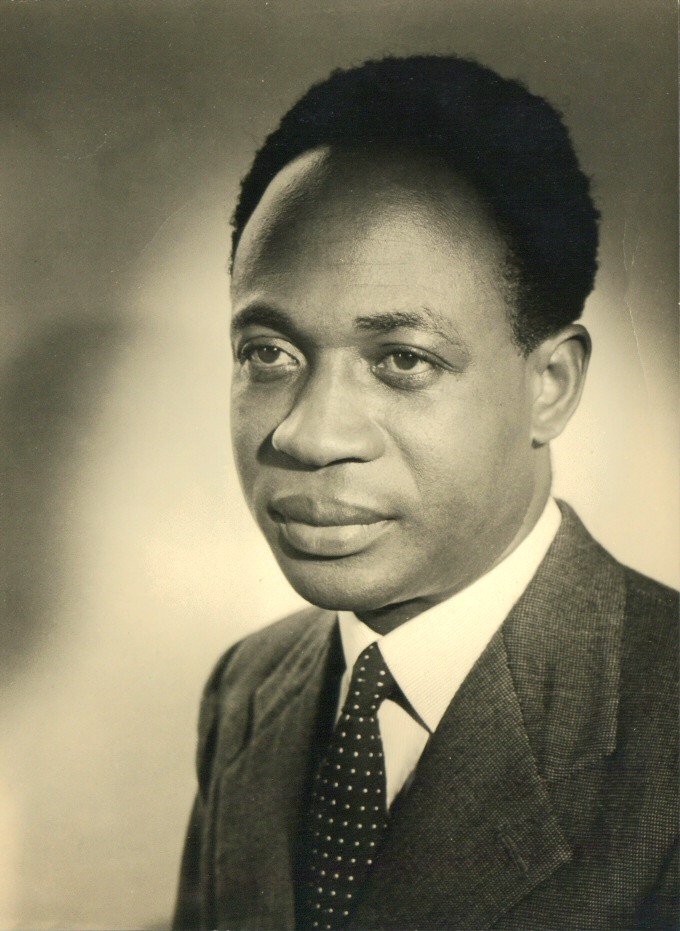
When people talk about Kwame Nkrumah, they often focus on one thing, Ghana’s independence in 1957. But beyond the famous declaration that “Ghana, our beloved country, is free forever,” there are fascinating facts about his life and leadership that many once dismissed as exaggerations or outright lies.
Here are verified truths about Nkrumah that might surprise you.
1. He Was Once a School Teacher in the U.S.
Before becoming a revolutionary leader, Kwame Nkrumah lived in the United States for nearly a decade (1935–1945). He studied at Lincoln University and later at the University of Pennsylvania.
To survive, he worked multiple jobs, including as a janitor and shipyard worker. Many doubted this story, assuming it was political folklore. But records confirm he struggled financially while pursuing his education.
His time in America deeply shaped his Pan-African ideology and exposed him to Black intellectual movements.
2. He Was Influenced by Marcus Garvey
Kwame Nkrumah openly acknowledged the influence of Marcus Garvey, whose “Africa for Africans” philosophy inspired a generation of Black leaders worldwide.
Some critics once dismissed this connection as political branding. However, Nkrumah frequently referenced Garvey in speeches and writings, and Garvey’s teachings directly influenced Nkrumah’s push for continental unity.
3. He Was Imprisoned Before Becoming Prime Minister
Many young Ghanaians are shocked to learn that Kwame Nkrumah was jailed by the British colonial government in 1950 for leading the Positive Action campaign.
Despite being in prison, he won a massive electoral victory in 1951. The British were forced to release him so he could form a government.
It sounds almost unbelievable, but it’s historical fact.
4. He Helped Finance African Liberation Movements
Nkrumah didn’t just speak about African unity, he funded it. Ghana under his leadership provided support to liberation movements in countries like Guinea, Algeria, and Congo.
His vision eventually led to the formation of the Organisation of African Unity in 1963 (now known as the African Union).
Some critics once labeled these claims as propaganda. Declassified documents and historical accounts confirm Ghana played a significant financial and logistical role.
5. He Survived Assassination Attempts
There were multiple attempts on Nkrumah’s life, including the 1962 Kulungugu bomb attack in northern Ghana.
He survived, but the incident increased paranoia within his administration and contributed to stricter security measures.
For years, some believed these assassination stories were exaggerated. They were not.
6. He Was Overthrown While Abroad
In February 1966, Nkrumah was on a peace mission to Vietnam when the Ghanaian military staged a coup.
Many initially thought the story was political drama. But while he was attempting to mediate during the Vietnam War, the government was toppled back home.
He never returned to power.
7. He Lived His Final Years in Guinea
After the coup, Nkrumah was welcomed by President Sékou Touré of Guinea, who named him honorary co-president.
It may sound symbolic, but it was real political recognition. He spent the remainder of his life there until his death in 1972.
8. He Wrote Several Books in Exile
Nkrumah wasn’t just a political figure, he was a prolific writer. In exile, he authored influential works including Neo-Colonialism: The Last Stage of Imperialism.
The book criticized Western influence in Africa and was controversial at the time. Some countries reportedly restricted its circulation.
9. He Introduced Major Infrastructure Projects
Under Nkrumah, Ghana saw rapid modernization. The most notable project was the Akosombo Dam, which created Lake Volta, one of the world’s largest man-made lakes.
At the time, critics said the project was unrealistic. Today, it remains central to Ghana’s power supply.
10. He Envisioned a United States of Africa
Perhaps the most controversial idea Nkrumah championed was a single African government, a “United States of Africa.”
Many thought it was unrealistic idealism. Even some African leaders disagreed with him. Yet today, continental integration efforts through the African Union echo parts of his vision.
Why These “Myths” Persist
Nkrumah remains one of the most debated African leaders in history. To some, he was a visionary hero. To others, an authoritarian idealist whose ambition exceeded Ghana’s economic capacity.
But separating myth from fact reveals something clear:
Kwame Nkrumah was far more complex than the simplified narratives taught in classrooms.
His life included struggle, exile, imprisonment, bold ambition, and continental influence real events that once sounded unbelievable but are firmly rooted in history.
Heritage Month