The Mundari (also spelled Mandari) are a small but distinct Nilotic ethnic group residing in South Sudan, primarily in the Central Equatoria state north of the capital, Juba. Traditionally cattle herders and agro-pastoralists, their way of life, beliefs, and social structures are deeply intertwined with livestock especially cattle which form the heart of Mundari culture and identity. (Wikipedia)
Geographical Location and Population
The Mundari live on traditional lands roughly 75 km north of Juba, centered around the town of Terekekaand spread across the fertile savannahs flanking the White Nile River. Their territory is bounded by neighboring Nilotic groups such as the Bor Dinka to the north and other ethnic communities to the south and west. Estimates suggest the Mundari population is between 70,000 and 100,000 people.
The land they inhabit consists of flat, clay-based plains with seasonal rivers and floodplains. In the rainy season, these become swampy but provide rich grazing grounds for livestock.
The Mundari speak Kutuk na Mundari, a language closely related to those of other Karo peoples such as the Bari, Pojulu, Kakwa, and Kuku. They are one of several Nilotic groups in South Sudan, and their traditions, social structures, and cultural practices bear similarities with, yet remain distinct from, neighboring communities.
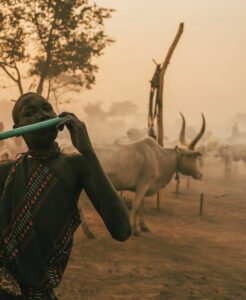
For the Mundari, cattle are far more than economic assets, they are the essence of cultural life. Cattle symbolize wealth, identity, status, and spirituality. The Mundari raise a breed known as the Ankole-Watusi, famous for its enormous horns and considered among the most dignified cattle in eastern Africa.
Cattle are used:
- As currency and dowry in marriage negotiations.
- As measures of wealth and social standing within the community.
- As sources of food: primarily milk, sometimes mixed with cow urine or blood in traditional diets, though the meat of cows is seldom consumed.
The proximity of cattle influences almost every aspect of daily life, from housing and settlement patterns to gender roles and ritual practices.
Lifestyle and Pastoral Practices
The Mundari are agro-pastoralists, meaning their livelihood combines cattle herding with cultivation of crops such as sorghum, maize, groundnuts, and sesame. During the dry season, young men, women, and children often leave their villages to form cattle camps, where they tend livestock and move in search of pasture and water. Elders and maternal relatives usually remain in permanent village hamlets.
Cattle camps are central not just economically but socially: they are places of cultural transmission, bonding, and communal responsibilities.
Beliefs, Rituals, and Cultural Practices
The Mundari hold a vibrant belief system that blends animist concepts with traditional reverence for nature and spiritual forces connected to livestock and the land. They believe that cattle mediate a connection to divine power and influence everyday life and prosperity.
Some key cultural practices include:
- Ritual scarification: Young men undergo rites of passage to adulthood, which include marking their foreheads with distinctive patterns that signify maturity and identity.
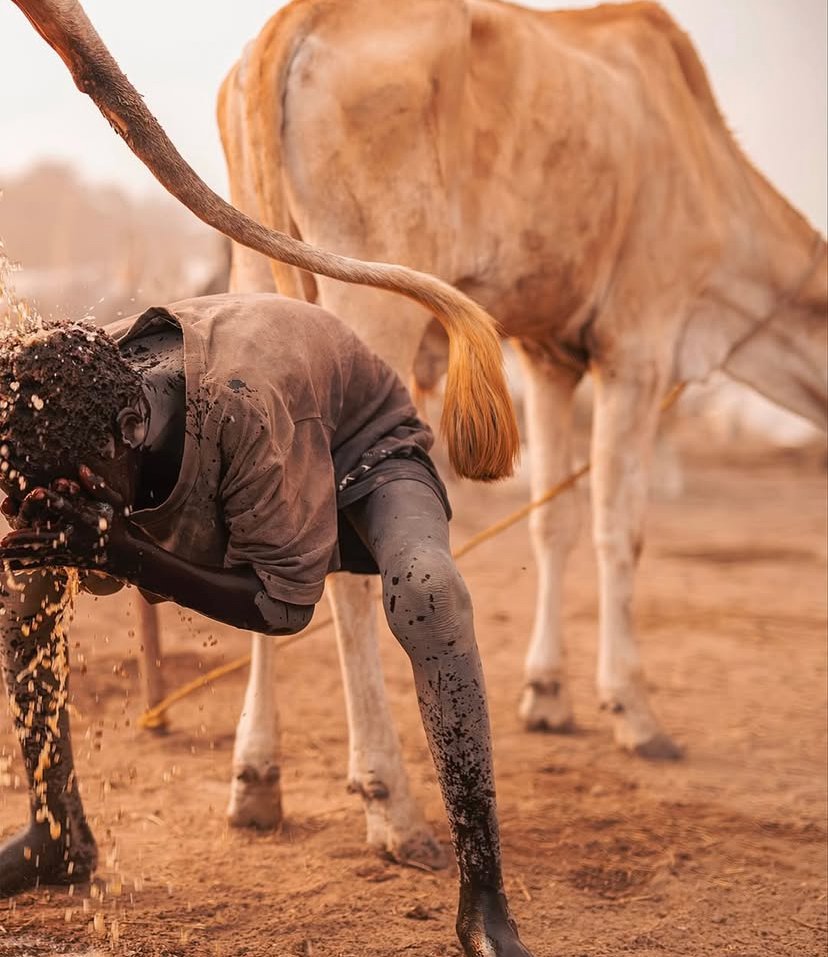
- Use of cattle products: Ash from burned cow dung is applied on skin and cattle to repel insects and protect against heat. Cow urine is used for washing or bleaching hair—a practice valued both culturally and practically in the harsh environment.
- Community sports and gatherings: Wrestling and dance are common social activities that bring people together and reinforce social ties. Social Organization and Marriages
Mundari society is organized into lineages and hamlets, each led by family elders. Generosity, hospitality, and mutual aid are highly prized values. The chief (Mar lo jur or Mar lo Bay) and other leaders play vital roles in adjudicating disputes, overseeing rituals, and guiding community life.
In marital customs, a prospective groom offers cattle to the bride’s family as bride price, and men may marry multiple wives if they can support them. This custom reinforces the role of cattle as currency and social capital.
Challenges and Modern Influences
Like many communities in South Sudan, the Mundari have experienced pressures from conflict, environmental change, and interaction with modern systems. Cattle rustling and clashes with neighboring groups such as the Bor Dinka occur, especially during dry seasons when grazing is scarce. Modern arms have replaced traditional weapons, heightening the stakes of such conflicts.
Despite these challenges, most Mundari communities continue to practice their traditions and adapt to changing realities, while preserving the central place of cattle in their culture.
For More Educative Information Click Here