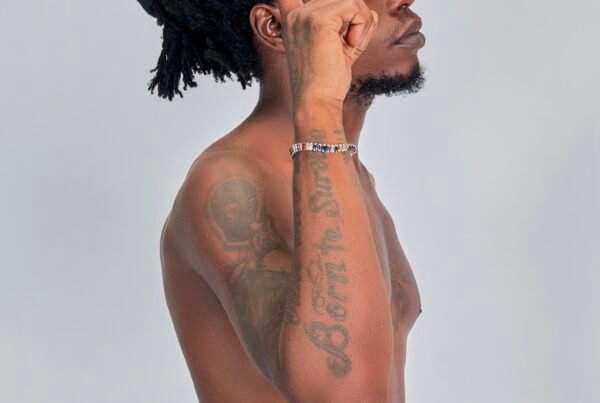
Amandla Stenberg was only a teenager when she entered the franchise, yet her brief appearance left an impression far larger than the amount of time she spent on screen. More than a decade later, however, reducing Stenberg to Rue would miss the more interesting story: the story of a performer who gradually moved from child actor to leading actor, musician, producer and increasingly deliberate creative voice. (Wikipedia).
Born on October 23, 1998, in Los Angeles, Amandla Stenberg began working professionally as a child. Her early career included modeling and commercials before acting roles began to establish her in film and television. Her first feature-film acting credit was in Colombiana in 2011, where she played the younger version of Zoe Saldana’s character. The following year changed the scale of her career.
The Hunger Games was not simply another early credit. It introduced Stenberg to a worldwide audience at an age when many performers are still trying to discover what kind of actor they might become.
As Rue, Amandla Stenberg had a difficult task. The character’s vulnerability had to feel genuine without becoming sentimental, while the relationship between Rue and Katniss had to develop quickly enough for the audience to care about its consequences. Stenberg accomplished that with a performance built less on grand speeches than on expression, physicality and restraint.

Amandla Stenberg
The result was significant, her performance became one of the most remembered elements of the film, and she received award recognition alongside Jennifer Lawrence.
But an early breakthrough can also become a creative trap. Once audiences associate a young actor with one unforgettable character, the temptation is to repeat what already worked.
Stenberg’s career moved in another direction.
Growing up in public without allowing one role to define the whole story
After The Hunger Games, Amandla Stenberg appeared in television, including Sleepy Hollow, and voiced Bia in Rio 2. The projects were different in tone and scale, but together they showed an actor gradually moving beyond the image of the child performer audiences had first encountered.
Then came Everything, Everything in 2017.
The film placed Amandla Stenberg in the center of a romantic drama as Maddy Whittier, a teenager whose life has been severely restricted by illness. It required a different kind of screen presence from Rue: less about surviving an external threat and more about communicating curiosity, isolation, fear and the desire to experience life.
Stenberg also contributed musically to the film, performing “Let My Baby Stay.” Music would continue to be a part of their creative identity rather than simply an occasional extension of acting.
The following year brought perhaps the most important acting challenge of Stenberg’s early career.
The Hate U Give and the responsibility of being heard
In The Hate U Give, Stenberg played Starr Carter, a teenager who witnesses the fatal police shooting of her childhood friend.
The film asked its central character to exist in two worlds. Starr moves between her predominantly Black neighborhood and a predominantly white private school, adjusting her behavior and language depending on where she is. After witnessing the shooting, however, the separation between those worlds becomes increasingly impossible to maintain.
Stenberg’s performance received strong critical recognition, and the role became an important part of the actor’s development because it required emotional intensity while placing a young character inside a much larger social conversation. The film earned Stenberg an NAACP Image Award for Outstanding Actress in a Motion Picture.
What makes this period particularly interesting is that Stenberg’s public identity was developing alongside their acting career.
They had already become known for discussing questions of race, identity, representation, beauty and culture. A 2016 Teen Vogue interview, for example, explored Stenberg’s thoughts about Black identity, natural hair, cultural appropriation and the experience of becoming publicly visible at a young age.
For Stenberg, acting was increasingly not an isolated profession. It was one part of a broader creative life.
Beyond acting: music, writing and production
It is easy to look at an actor’s filmography and assume that acting is the complete story. Stenberg’s career complicates that assumption.
They have performed music, including work connected to Everything, Everything, and appeared in the folk-rock duo Honeywater earlier in their career. They also participated in Beyoncé’s Lemonade, adding another dimension to an already unusual early résumé.
Their interests have also extended into writing and creative development. In 2016, Stenberg was associated with the comic Niobe: She Is Life, a fantasy project created by Amandla Stenberg and Sebastian A. Jones. The project reflected an interest that would appear repeatedly throughout their career: using popular genres to create space for characters and perspectives that are not always placed at the center of those genres.
Then came another important shift: producing.
In Bodies Bodies Bodies, released in 2022, Stenberg played Sophie while also serving as an executive producer. The move mattered because producing changes an artist’s relationship with a project. An actor primarily controls their performance; a producer can become involved in the larger creative process surrounding the work.
In an interview with Them, Stenberg discussed the film’s approach to contemporary youth culture and queer identity, describing their involvement as extending beyond simply appearing in front of the camera.
That evolution, from performer to participant in the construction of a project is one of the most revealing threads in Stenberg’s career.
Entering a galaxy far, far away
In 2024, Stenberg entered one of the most recognizable fictional universes in modern entertainment with The Acolyte, a Star Wars series created by Leslye Headland.
Stenberg played twins Osha and Mae Aniseya, giving the actor the unusual task of portraying two related characters whose identities and histories are central to the story. The series was set during the High Republic era, before the events of the main Star Wars films. (Prime Video)
The significance of the role was not simply that Stenberg had joined a major franchise. It demonstrated how far their career had traveled from the young performer audiences first saw in The Hunger Games.
Rue was defined partly by innocence and vulnerability.
Osha and Mae required separation, contradiction and ambiguity.
The distance between those performances tells its own story.
A career built around refusing easy categorization
Perhaps the most interesting thing about Amandla Stenberg is not any individual film.
It is the pattern.
The roles move between dystopian drama, television fantasy, romance, social drama, horror, animation and science fiction. Their work has included acting, music, voice performance and producing.
That variety can sometimes look accidental when viewed as a list.
Viewed as a career, it looks more deliberate.
Stenberg has repeatedly entered spaces where the expectations surrounding them could have become restrictive and then changed direction. The child actor became a young leading actor. The young leading actor became an artist working across several mediums. The performer became a producer. The recognizable face of a major franchise became someone willing to work in smaller and stranger projects as well.
This does not mean every project has been universally successful. A career is not a straight line, and Stenberg’s filmography includes projects with very different levels of critical and commercial reception. What is more demonstrable is the range of the choices. (Rotten Tomatoes)
The importance of growing without pretending you never changed
There is something unusual about watching a person become an adult while the public is watching.
For an ordinary person, childhood experiments, changing opinions and evolving identities happen mostly away from cameras. For a young actor, those changes can become part of the permanent public record.
Stenberg entered the entertainment industry early enough for audiences to associate them with a particular age. Yet their later work shows an unwillingness to freeze that version of themselves in place.
That may be the most useful way to understand their career.
Not as the story of a child star who became famous.
Not simply as the story of Rue from The Hunger Games.
And not only as the story of an actor who became outspoken about culture and identity.
It is the story of an artist who kept expanding the definition of what their career could contain.
What remains after the roles
Amandla Stenberg’s career is still developing. Current film listings include Wildwood and the forthcoming Children of Blood and Bone, while their previous work continues to span film, television, music and production. (Rotten Tomatoes)
That makes any attempt to write a final assessment of Stenberg premature.
Perhaps that is fitting.
The most compelling part of their story has never been that they arrived fully formed. It has been watching the formation happen in public: the early commercial work, the sudden recognition of The Hunger Games, the more demanding dramatic roles, the music, the writing, the conversations about identity, the move behind the camera and the leap into Star Wars.
Amandla Stenberg’s career therefore offers something more interesting than a conventional celebrity success story.
It offers a record of evolution.
And evolution, unlike fame, does not have a final photograph.
It keeps moving click Here.