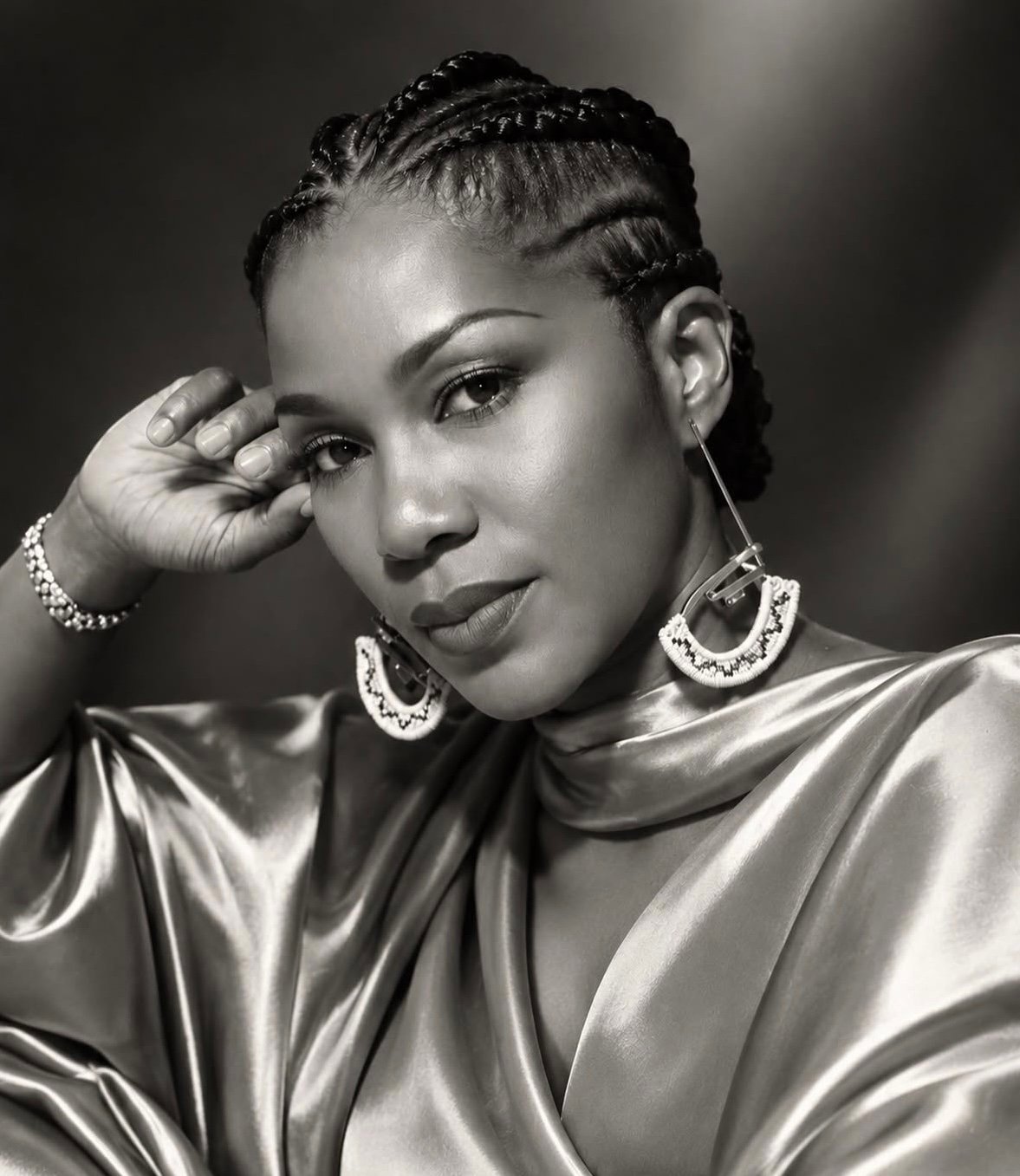
Stephanie Linus, a prominent figure in Nigeria’s film industry for over two decades, has transitioned from acting to filmmaking, using her influence to spotlight issues affecting women and girls. Known formerly as Stephanie Okereke, she is recognized as an actress, director, producer, and humanitarian. Her work prompts reflection on the role of storytelling, exemplified by her film Dry, which serves as a platform for public discourse. Linus’s career demonstrates her commitment to advocacy beyond her cinematic contributions. Click Here
Stephanie Linus was born on 2 October 1982 in Ngor-Okpala, Imo State, Nigeria. She spent much of her early life in Delta State, where she attended St. Bridget’s Secondary School in Asaba. Her interest in drama developed during her school years, when she participated in literary and debating activities. What began as an interest in performance eventually became a professional career that would take her beyond Nigeria’s entertainment industry.
She later studied English and Literary Studies at the University of Calabar. This educational background is relevant to understanding her development as a filmmaker: acting requires the ability to interpret characters, but writing and directing also demand an understanding of language, human behaviour and the ways stories communicate meaning.
Her decision to pursue filmmaking further led her to the New York Film Academy, where she received formal film training. This step marked an important transition in her career. Rather than limiting herself to interpreting stories created by others, she acquired skills that would help her shape stories from behind the camera as well.
Stephanie began her cinematic journey in 1997 with Nollywood films and gained recognition through her role in Emotional Crack, earning two Reel Awards in 2003. Her participation in the Most Beautiful Girl in Nigeria pageant in 2002 introduced her to wider public attention, but she focused on her acting career. With notable films like Nnenda and Days of Bondage, her versatility grew, paving the way for her ambitions as a filmmaker. In 2008, she directed, wrote, and produced Through the Glass, marking a significant advancement in her career by engaging deeply with the filmmaking process, which received international acclaim.
Her experience illustrates an important aspect of Nollywood’s development: Nigerian performers have increasingly sought opportunities to become writers, directors and producers, gaining greater control over the stories that reach audiences.
For Linus, however, this transition would eventually lead to a project with a particularly serious social purpose.
Among Stephanie Linus’s most significant works is Dry, a drama released in 2015 that she wrote, directed, produced and starred in. The film examines child marriage, sexual violence, maternal health and obstetric fistula, bringing attention to the experiences of girls and women whose suffering is often overlooked.
At the centre of the story is Halima, a young girl forced into marriage with an older man. Her experiences expose the devastating consequences of child marriage, early pregnancy and inadequate access to appropriate healthcare. The film also follows Zara, a medical doctor portrayed by Linus, whose own traumatic past shapes her response to the suffering of others.
The story is fictionalised, but the social problems it addresses are real.
Obstetric fistula is an injury that can develop when prolonged, obstructed childbirth damages the tissue between the birth canal and the bladder or rectum. It can cause persistent leakage of urine or faeces and may lead to serious health complications, social exclusion and psychological distress. With timely, appropriate care, many cases can be prevented, and treatment or surgery can help women recover.
By placing this condition within a dramatic narrative, Dry gives audiences a way to understand the human consequences behind a medical term. It shifts attention from statistics alone to the lives of individuals, their relationships and the social circumstances that shape their choices.
The significance of the film lies not only in the subject it explores but also in the creative responsibility Linus assumed. She did not merely appear in a production addressing women’s health; she helped develop and direct the story, placing the subject at the centre of the filmmaking process.
Recognition for Dry
The film received substantial recognition, including the Best Overall Movie award at the 2016 Africa Magic Viewers’ Choice Awards and Best Nigerian Film at the Africa Movie Academy Awards in 2016. It also received recognition at international film events, including the Pan African Film Festival in Los Angeles.
These achievements are important because they show that a film addressing difficult social issues can also succeed as a creative work. Its subject matter did not prevent it from gaining recognition from film-industry audiences and award organisations.
The film’s wider impact is also reflected in its use during public-awareness activities. In 2017, the United Nations Population Fund (UNFPA) supported screenings and awareness efforts involving Dry, connecting its message with conversations about reproductive health, child marriage and the prevention of obstetric fistula.
It would be inaccurate to attribute changes in public policy or individual health outcomes to a film alone. Nevertheless, Dry illustrates how cinema can contribute to a broader effort involving education, healthcare professionals, community organisations and policymakers.
Stephanie Linus’s humanitarian activities are closely connected to the themes she explores in her filmmaking. Her work has focused particularly on women’s health, reproductive rights and the challenges faced by girls and women affected by obstetric fistula.
Through the Extended Hands Foundation, she has supported awareness efforts concerning the condition and the circumstances that place vulnerable women at risk. Stephanie Linus advocacy has sought to challenge the stigma associated with fistula and encourage greater attention to treatment, prevention and maternal healthcare.
In March 2017, UNFPA appointed her as its Regional Ambassador for West and Central Africa. In that role, she advocated for maternal and reproductive health, women’s rights and the well-being of young people. Her work with the organisation included public engagement and awareness activities conducted over several years.
This appointment was significant because it connected her public profile as an entertainer with the work of an international organisation focused on sexual and reproductive health.
The relationship between her films and advocacy is particularly important. A dramatic production can introduce audiences to a problem, but sustained social change also requires accessible healthcare, informed communities, effective public policy and resources for those affected. Linus’s work brings the storytelling element into this wider effort.
Her contribution should therefore be understood as part of a broader network of people and organisations working to improve maternal health, rather than as a substitute for medical services or public institutions.
Awards, recognition and international engagement
Recognition has accompanied Stephanie Linus’s work both within the entertainment industry and beyond it.
Some of the notable milestones in her career include:
2003: Reel Awards for Best Actress in an English-language production and Actress of the Year for Emotional Crack.
2006: Afro-Hollywood Award for Best Actress.
2016: Africa Magic Viewers’ Choice Award for Best Overall Movie for Dry.
2016: Africa Movie Academy Award for Best Nigerian Film for Dry.
2017: Appointment as UNFPA Regional Ambassador for West and Central Africa.
Her international engagement has also included participation in the stage reading of Seven in New York in 2010, alongside prominent actors including Meryl Streep. The reading formed part of a programme highlighting women’s experiences and solutions to violence against women.
Stephanie Linus has also participated in international conferences and discussions on issues affecting women and young people. These appearances reflect the expansion of her professional activities from entertainment into public advocacy and international dialogue.
Her achievements demonstrate that recognition can take different forms: awards celebrate artistic work, while humanitarian appointments acknowledge the potential of a public figure to bring attention to issues that affect society.
Although Stephanie Linus is a public figure, her professional achievements provide a more useful basis for understanding her career than speculation about her private life.
She married Nigerian media entrepreneur Linus Idahosa in Paris on 21 April 2012. Public biographical accounts identify family life as another part of her journey, but the details of her marriage and motherhood should be discussed respectfully, without treating private experiences as entertainment.
Her career also challenges the assumption that public visibility must be measured by the frequency with which an actor appears in films. Writing, directing, producing, advocacy and business development can all require considerable time away from conventional on-screen roles.

Stephanie Linus
Through Next Page Productions, where she is identified as founder and creative director, Linus continues to develop her work as a filmmaker. The company’s stated projects include When Women Were Counted, a historical epic inspired by the Aba Women’s Resistance of 1929. This project reflects an interest in stories rooted in Nigerian history and women’s experiences.
The project is also relevant to understanding her creative direction: historical storytelling can preserve collective memory while encouraging audiences to reconsider the contributions of people whose experiences have not always received sufficient attention.
Stephanie Linus’s career illustrates the evolving role of an actor, transitioning from performance to creative ownership in filmmaking. Her journey emphasizes the impact filmmakers can have when actively involved in writing, directing, and producing, allowing them to influence the subjects and audiences they address. While not every film needs a social message, Linus’s work demonstrates how cinema can tackle broader issues. This is exemplified by her project “Dry” and highlights the potential of films to shape societal narratives, preserve cultural experiences, and foster intergenerational conversations in Nigerian cinema.