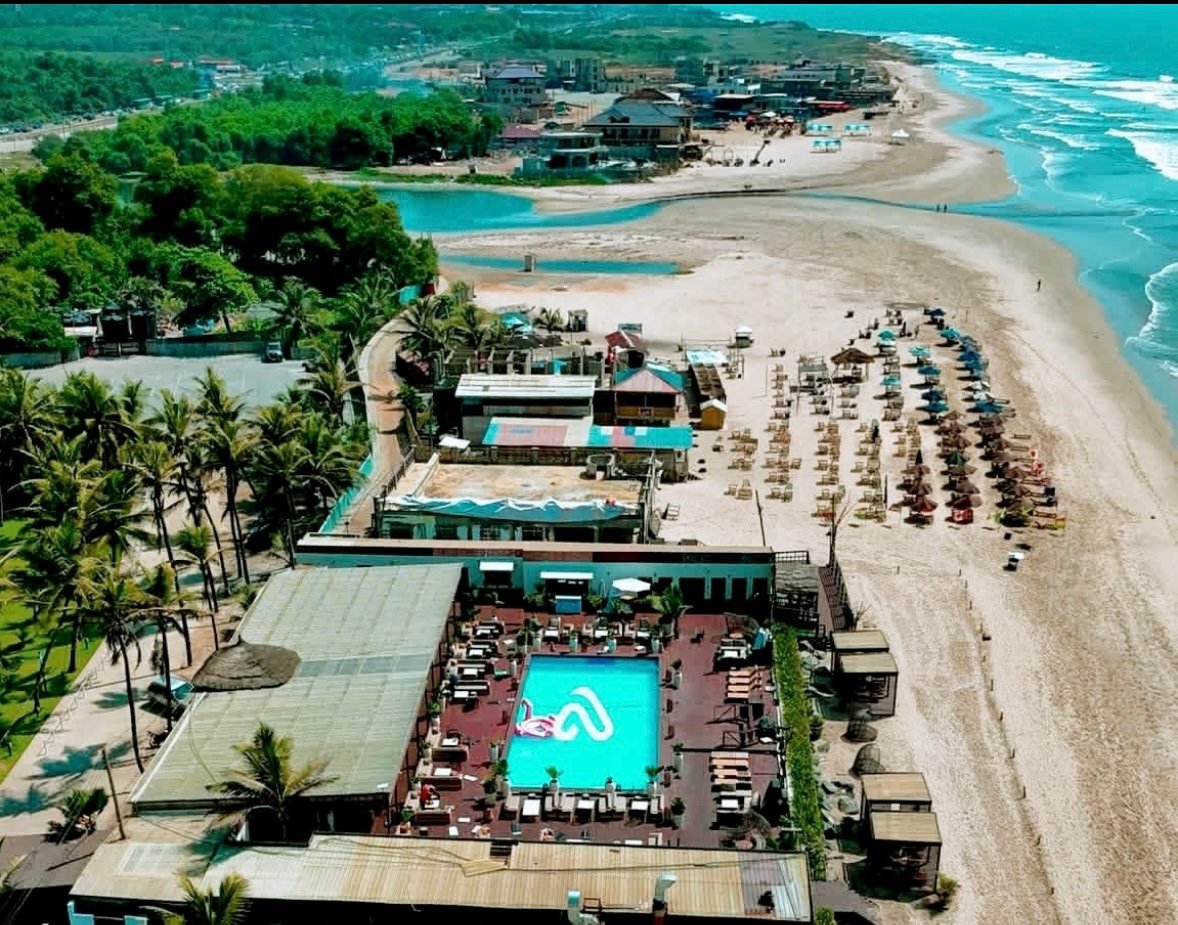
The recent demolition exercise along the Labadi beach front has reignited a broader debate about the changing character of Accra, the future of public spaces and the growing pressure on communities whose livelihoods have long been tied to the city’s prime locations.
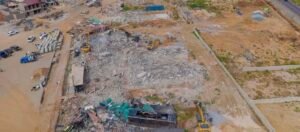
The exercise, which reportedly took place on Friday under the supervision of National Security, involved the removal of structures along the beach front in the vicinity of the Labadi Beach Hotel. Among the structures reportedly affected were permanently constructed facilities, including the Polo Beach Club.
The operation has generated contrasting reactions, with questions being raised about the circumstances surrounding the demolition, the interests involved and the future of the people and businesses that have traditionally occupied and operated within the area.
Speaking about the development, a traditional leader described the exercise as part of a much wider concern about how Accra is being reshaped in the name of development, tourism and urban renewal.
“As a traditional leader, I will say it plainly: call it reclamation, tidying up or tourism management, what happened on the Labadi beach front looks, to many Ghanaians, like gentrification in motion,” he said.
A Different Exercise From Flood-Mitigation Operations
The traditional leader stressed that the Labadi Beach operation should not be confused with the government’s ongoing flood-mitigation exercises in other parts of the capital.
He specifically distinguished the Labadi Beach exercise from operations around the Kpeshie Lagoon, East Legon Boundary Road, Oyarifa and areas behind Mayfair Estates, which have been linked to efforts to address flooding and protect waterways.
According to the account circulating online, the Friday operation at Labadi Beach was a separate exercise reportedly carried out under National Security supervision following a request from the Labadi Beach Hotel.
The reported focus was the removal of structures along the beach in front of the hotel.
The hotel has maintained that the structures raised concerns relating to safety, tranquillity, reputation and the overall visitor experience, while also affecting the orderly management of an important tourism destination.
The traditional leader acknowledged that some of those concerns cannot simply be dismissed.
“Labadi Beach has become a free-for-all, and its problems are real. But it was also a livelihood,” he said.
He accepted that sanitation, security and unregulated commercial activity require attention, but questioned whether demolition should be the primary response and whether affected communities were adequately considered in the process.
“When a private business asks and state security acts, ordinary Ghanaians are right to ask who this city is being cleaned up for,” he said.
Labadi: More Than a Tourist Destination
For the traditional leader, the central issue is not whether Labadi has problems. Rather, it is how those problems are addressed.
He argued that the Labadi beach is not simply a destination for international tourists and hotel guests. For generations, it has also been a place where ordinary Ghanaians work, socialise, eat, listen to music and escape the pressures of everyday life.
“Disorder calls for regulation, not erasure,” he stressed.
His comments reflect a broader concern that efforts to improve the appearance and commercial value of prime areas in Accra could inadvertently remove the very communities, traders and small businesses that have given those places their distinctive character.
He pointed to what he described as a similar pattern in other parts of the capital.
“Across Accra’s prime locations, vendors are being pushed out, my own Osu among them, as the city is reshaped into something polished and expensive, a sort of Times Square on the Gulf of Guinea,” he said.
“When the people who gave a place its life are cleared away, what remains is a postcard, not a community.”
Development, Tourism and the Question of Who Benefits
The Labadi controversy has also brought the question of development into sharper focus.
There is little dispute that Accra needs better-managed public spaces, improved sanitation, safer beaches and properly regulated commercial activity. The more difficult question is how those objectives can be achieved without disproportionately affecting people whose livelihoods depend on those spaces.
The traditional leader’s argument is that urban renewal should not be measured only by cleaner landscapes, new investments or improved tourism infrastructure.
It should also consider what happens to the people who have lived, worked and built economic activities around those locations.
For him, the concern extends beyond Labadi.
He sees the beach front as one example of a larger transformation in which land and strategically located spaces are becoming increasingly valuable, creating pressure for their commercial redevelopment.
Land, Tradition and Communal Interests
The traditional leader also connected the Labadi debate to questions surrounding land ownership, traditional authority and the changing role of customary institutions.
He argued that traditional authorities have a responsibility to protect communal interests across generations because stools and skins traditionally hold land in trust for communities.
“Stools and skins hold land in trust for the living, the dead and the unborn,” he said.
In his view, increasing land values and large-scale investment can create situations in which ordinary families become increasingly disconnected from land that has historically been associated with their communities.
He stressed that the issue should not be reduced simply to foreign investment.
Instead, he argued that one of the deeper vulnerabilities lies in the inability of some Ghanaian families and communities to protect and document their own interests, particularly when they are faced with financial pressure, internal disagreements or complex land transactions.
The Three Things Ghanaians Must Do
The traditional leader called for action on three fronts: stronger traditional leadership, greater political accountability and proper documentation of family land.
1. Traditional leaders must speak up
He called on chiefs and other traditional authorities to take seriously their responsibility as custodians of communal land.
“A chief who sells what he only holds in trust betrays all three,” he said, referring to the living, the dead and generations yet unborn.
His argument is that traditional authority must be exercised with an awareness that decisions concerning land can affect communities for generations.
2. Citizens must demand accountability
He also urged citizens to ask questions whenever demolitions are undertaken, particularly when state security agencies are involved and private interests are alleged to be connected to the exercise.
Among the questions he believes deserve clear answers are:
Who authorised the exercise?
Under what law or legal authority was it carried out?
Were the affected people given adequate notice?
What process was followed before the structures were removed?
For him, these are not merely political questions but basic questions of public accountability.
3. Families Must Document Their Land
The third area he highlighted was documentation.
He encouraged families to properly preserve and update their land records, including indentures, site plans, searches and registrations.
He also urged families to document their histories, genealogies and the boundaries of ancestral lands.
“In a land dispute, the person with unclear paperwork loses,” he said.
His warning is that families may have longstanding claims to land but still struggle to defend those claims when they cannot produce adequate documentation.
A Lesson From Fiction
In making his broader argument, the traditional leader also drew an unusual comparison with Black Panther, referring to the fictional character Killmonger and his determination to fight for his people.
But he said Ghana does not need a Killmonger.
“Ghanaians do not need a Killmonger,” he said. “They need to hold themselves accountable, to record who they are and what is theirs, before it is truly too late.”
The reference, he explained, was less about confrontation than about the importance of identity, ownership and collective responsibility.
Labadi as a Larger Warning
For the traditional leader, the demolition at Labadi should not be viewed as an isolated incident.
He believes it raises fundamental questions about the future of Accra: Who gets to shape the city? Who benefits from its development? And what happens to communities when tourism, investment and urban renewal increasingly determine the value and use of prime locations?
“Labadi is a warning, not an isolated incident,” he said.
“If Ghanaians treat it as one more news cycle, they will wake up as tourists in their own capital.”
The debate surrounding Labadi therefore goes beyond the structures that were removed.
At its heart are competing visions of what Accra should become: a cleaner and more regulated capital capable of attracting investment and tourism, or a city where development must also preserve the livelihoods, histories and social spaces that have shaped its identity.
Finding a balance between those interests will require more than demolition. It will require transparent processes, meaningful engagement with affected communities, respect for lawful land interests and a clear public conversation about who the modern Accra is ultimately being built for.
Stay Here For More Updates