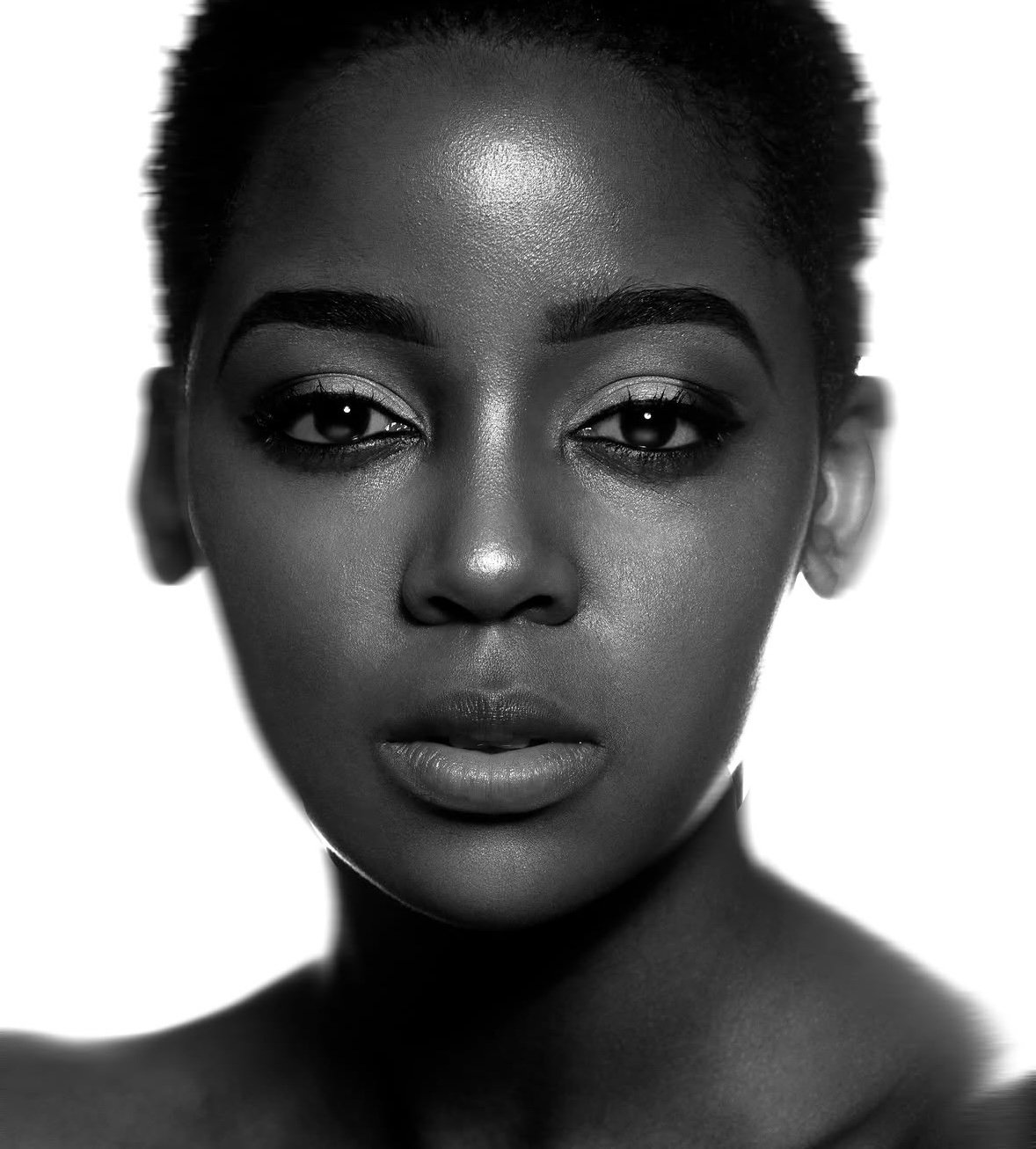
When Thuso Mbedu appears on screen, there is often very little theatrical excess. She does not need to dominate a scene with exaggerated gestures or carefully manufactured glamour. Her strength is subtler. A look can become a sentence. Silence can become an entire monologue. Vulnerability can turn into defiance before the audience even realizes the transformation has happened.
That quality has taken Thuso Mbedu from the streets of Pietermaritzburg, South Africa, to some of the most prestigious productions in international film and television.
But the remarkable part of her story is not simply that she made it to Hollywood.
It is how she got there and what she carried with her when she arrived.
Before Hollywood, There Was Pietermaritzburg
Thuso Nokwanda Mbedu was born on 8 July 1991 in Pietermaritzburg, KwaZulu-Natal, South Africa. She was raised largely by her grandmother after losing her mother at a very young age.
Her childhood was not the kind of beginning that naturally suggests international stardom.
In interviews, Mbedu has spoken candidly about hardship during her upbringing. She recalled periods when there was not always enough food and described having to navigate circumstances that demanded resilience long before she became a celebrated actress.
Yet hardship did something important in her life: it gave her an intimate understanding of survival.
That understanding would later become one of the defining characteristics of her acting.
Mbedu has repeatedly taken on women who are confronted by systems larger than themselves,women who have every reason to surrender but somehow continue moving.
But when Thuso Mbedu plays such characters, there is a sense that she understands something about them from the inside.
She Did Not Originally Plan to Become an Actress
Perhaps one of the most interesting details about Mbedu’s journey is that acting was not initially the obvious destination.
She has spoken about once considering a career in dermatology. It was during high school, after choosing drama as a subject, that performing began to reveal itself as something more than an extracurricular interest.
That discovery eventually led her to the University of the Witwatersrand, where she studied Physical Theatre and Performing Arts Management.
She also spent time studying at the Stella Adler Studio of Acting in New York.
The significance of that path should not be underestimated.
Mbedu did not simply wake up one morning as a Hollywood star. She trained, auditioned, failed, learned and kept going.
Long before international audiences knew her name, she was building the technical foundation behind the performances that would eventually make people pay attention.
The South African Actress Who Refused to Remain a Secret
Mbedu began working professionally in South African television in the mid-2010s, appearing in productions including Saints and Sinners, Isibaya and Scandal!.
But it was the South African teen drama Is’Thunzi that changed the trajectory of her career.
Her performance brought her major recognition and consecutive International Emmy nominations in 2017 and 2018. She also won a South African Film and Television Award for Best Actress in a TV Drama.
Suddenly, the industry had a name it could no longer ignore.
Mbedu was not merely another promising young actress.
She was becoming a performer capable of carrying emotionally demanding material.
And then came the role that would change everything.
Cora Randall: The Performance That Opened the World
In 2021, Mbedu starred as Cora Randall in Barry Jenkins’ adaptation of Colson Whitehead’s Pulitzer Prize-winning novel The Underground Railroad.
It was an enormous opportunity and an enormous responsibility.
Cora is a young enslaved woman attempting to escape the brutal reality of slavery. The story required Mbedu to portray fear, grief, exhaustion, hope, rage and determination, often without relying on dialogue.
Mbedu did not merely play Cora.
She inhabited her.
For an actress from South Africa to become the leading woman of a major American television series was itself historic. Mbedu became the first South African actress to lead an American television series.
But the significance went deeper than the headline.
Mbedu approached the material by researching American slavery and exploring the historical connections between African people and the wider Black diaspora.
The performance was subsequently recognized with major awards and nominations, including a Gotham Award and the Independent Spirit Award for Best Female Performance in a New Scripted Series.
The industry had discovered what audiences in South Africa already knew:
Thuso Mbedu could carry a story.
Then Came Nawi
If The Underground Railroad introduced Mbedu to a global television audience, The Woman King announced that she could command the big screen.
In Gina Prince-Bythewood’s 2022 historical action epic, Mbedu played Nawi, a young woman who joins the Agojie, the famed all-female warrior unit of the Kingdom of Dahomey.
She starred alongside Viola Davis, Lashana Lynch and Sheila Atim, among others.
The role demanded considerably more than conventional dramatic acting.
Mbedu underwent extensive physical training to prepare for the film’s demanding fight sequences and action work.
Nawi is ambitious, rebellious, frightened, courageous and determined to discover who she is.
And once again, Mbedu found herself portraying a young African woman fighting to determine her own destiny.
There was a fascinating connection between Nawi and Cora.
Both characters exist in worlds shaped by oppression. Both are forced to confront systems designed to limit them. And both discover that survival is not simply about staying alive,it is about refusing to surrender one’s identity.
Mbedu herself has spoken about the parallels between the two projects and the ways their stories explore systems that attempt to keep Black people and women down.
Her Biggest Strength May Be Her Restraint
In an entertainment industry that often rewards volume, spectacle and constant visibility, Mbedu’s career has developed around something different.
Presence.
She does not need to be the loudest person in the room.
Her performances frequently work because she allows emotions to accumulate rather than announcing them.
That restraint is particularly powerful when she plays characters who have been denied power.
Cora does not need to scream every time she is afraid.
Nawi does not need to explain every wound.
The audience can see it.
And that is where Mbedu’s acting becomes particularly effective: she trusts viewers enough to let them participate in the emotion.
More Than an Actress
Mbedu’s importance extends beyond the list of films and awards attached to her name.
Her career represents something larger happening in global entertainment.
For decades, African actors seeking international recognition often had to navigate an uncomfortable question: how much of themselves could they bring into international spaces?
Mbedu’s rise suggests a different possibility.
You can cross borders without leaving your identity behind.
Her South African background is not an obstacle that she has had to disguise.
It is part of the foundation of her artistry.
Her journey from Pietermaritzburg to international productions demonstrates that African performers can enter global spaces while still being deeply connected to African histories, experiences and perspectives.
That matters because representation is not simply about putting an African face on a screen.
It is also about who gets to tell the story, who gets to embody complexity and who gets to be seen as the hero.
The Woman Behind the Roles
There is another reason Mbedu’s story resonates.
She has never presented success as though it arrived effortlessly.
In discussing her journey, she has spoken openly about hardship, persistence and the amount of work required to reach the position she occupies today. In one interview, she described having to work extremely hard to reach the point at which she could participate in projects such as The Woman King.
That honesty makes her success more meaningful.
Because the glamorous photographs and international premieres tell only the final chapter.
They do not show the auditions.
They do not show the uncertainty.
They do not show the young woman trying to establish herself in an industry where talent alone is rarely enough.
They do not show the years when the world had not yet learned her name.
A New Generation Is Watching
Perhaps the greatest significance of Thuso Mbedu is not what she has already accomplished.
It is what her existence makes possible.
A young girl watching her on screen can see an African woman at the centre of an international story,not as a stereotype, not as background decoration and not as somebody waiting to be rescued.
She can see ambition.
She can see vulnerability.
She can see physical strength.
She can see intelligence.
She can see contradiction.
Most importantly, she can see possibility.
That is the quiet power of representation.
It does not merely change what audiences see.
Sometimes, it changes what audiences believe they can become.
Thuso Mbedu Is Still Only Beginning
There is a temptation with successful actors to tell their stories as though the destination has already been reached.
But Mbedu’s career is better understood as a continuing ascent.
She has moved from South African television to acclaimed international television, then to major Hollywood cinema, while also expanding into voice acting and other forms of screen work.
Her credits include the animated film Mufasa: The Lion King and Netflix’s Castlevania: Nocturne, demonstrating that her range is not confined to live-action historical drama.
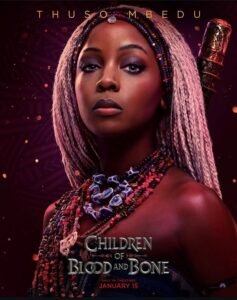
She has also been associated with major forthcoming projects, including the film adaptation of Tomi Adeyemi’s Children of Blood and Bone, an ambitious fantasy project with a predominantly African and Black cast.
If her past choices are any indication, Mbedu is unlikely to be satisfied with playing characters who merely occupy space.
She seems drawn to characters who have something to say, even when they say it without words.
The Real Thuso Mbedu Story
It would be easy to reduce Thuso Mbedu’s story to a familiar inspirational formula:
Young African girl.
Hard childhood.
Dreams of becoming an actress.
Hollywood success.
But that version misses the most interesting part.
Mbedu’s story is not simply about escaping hardship.
It is about turning experience into artistic power.
The girl from Pietermaritzburg became an actress capable of portraying women whose worlds are falling apart.
The performer who once had to fight for opportunities now works on productions watched around the world.
The young woman who was once an unknown name has become a representative of what African talent can look like on the international stage.
And yet, perhaps the most compelling thing about her career is that she has not appeared to rush the transformation.
She has built it role by role.
Performance by performance.
Challenge by challenge.
A Star Without Needing to Shout
Thuso Mbedu’s rise is important because it challenges an old assumption about what an African global star has to look like.
She does not need to abandon where she came from to become internationally relevant.
She does not need to make herself smaller to fit into Hollywood.
And she does not need to turn her personal history into a spectacle.
Her work speaks.
Sometimes fiercely.
Sometimes quietly.
But it speaks.
From Is’Thunzi to The Underground Railroad, from The Woman King to her expanding work across film and animation, Mbedu has demonstrated a rare ability to make audiences feel the humanity beneath the character.
That may ultimately be her greatest gift.
Not fame.
Not awards.
Not Hollywood.
Humanity.
Because long after the red carpets disappear and the headlines are forgotten, audiences remember the performers who made them feel something.
Thuso Mbedu has already done that.
And if the trajectory of her career is any indication, the world has probably seen only the opening chapters.
The girl from Pietermaritzburg did not simply make it to Hollywood.
She arrived carrying a story and then made the world listen.